
Views: 0 Author: Site Editor Publish Time: 2026-02-02 Origin: Site


You must pick the best elevator for your building. Hydraulic elevators work well for short or medium buildings. They are cheaper and easy to use. Traction elevators are good for tall buildings. You should look at the height of your building. Check how much space you have. Think about your budget. Safety and efficiency are very important when choosing an elevator.
Hydraulic elevators work well in short or medium buildings. They cost less and are simple to put in.
Traction elevators are good for tall buildings. They move faster and can carry more people at once.
Think about how tall your building is and how much space you have. Hydraulic elevators use less space than traction elevators.
Plan your money carefully. Hydraulic elevators cost less at first and are cheaper to fix. Traction elevators can cost more over time.
Look at how much the elevator will be used. Hydraulic elevators are strong and can lift heavy things. Traction elevators are better when lots of people use them.
It is important to know how hydraulic and traction elevators are not the same. Each one works in its own way and is good for different buildings.
A hydraulic elevator moves the cab up and down with a piston and fluid. You usually see these in buildings that are not very tall.
Traction elevators use ropes and counterweights to move. These are found in taller buildings because they go higher and faster.
You should see how each elevator works. Hydraulic elevators push the cab from under it. Traction elevators pull the cab up with cables from above. This changes how fast they go, how much energy they use, and where you can put them.
Tip: Traction elevators are better for tall buildings. Hydraulic elevators are good for shorter buildings.
The table below helps you see the differences between the two types:
Feature | Hydraulic Elevator | Traction Elevators |
|---|---|---|
How it moves | Uses fluid and piston | Uses ropes and counterweights |
Best for | Low to mid-rise buildings | Tall buildings |
Speed | Slower | Faster |
Space needed | Less machine room space | Needs more overhead space |
Maintenance | Simple and less frequent | More complex |
Cost | Lower initial cost | Higher initial cost |
Noise | Quieter operation | Can be noisier |
Think about how tall your building is. Think about how much money you want to spend. Think about how fast you want the elevator to go. Traction elevators are faster and work well in tall buildings. Hydraulic elevators cost less and are good for shorter buildings.
Note: Always look at what your building needs before you pick. The right elevator will help keep your building safe and work well.
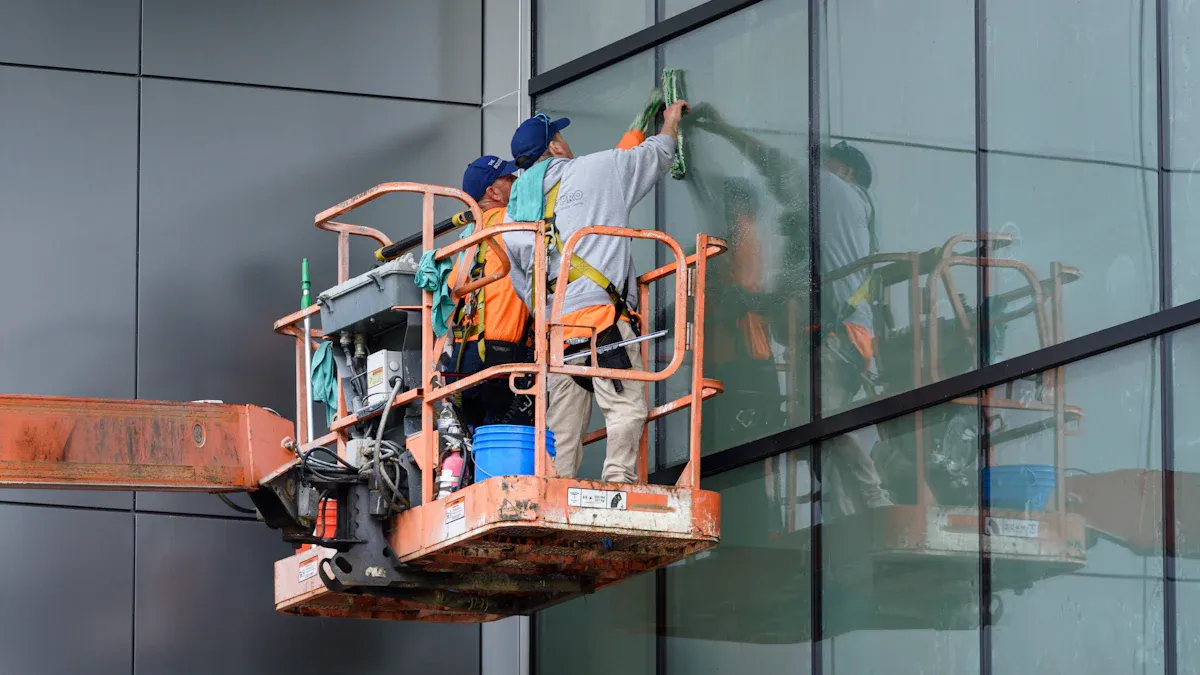
Image Source: pexels
A hydraulic elevator uses a simple system to move people or goods. It works with a piston that pushes the cab up when oil goes into a cylinder. When you want to go down, the oil goes back to the tank. The cab lowers smoothly. You do not need a deep pit or a big machine room for most hydraulic elevators. This makes them easy to put in many buildings.
Hydraulic elevators have many good points. They cost less for low to mid-rise buildings. These elevators can carry heavy loads, so you can move big things easily. Nantong Haibao Construction Machinery Co., Ltd. makes hydraulic elevators with strong safety features. You will see devices like the overflow valve, which stops too much pressure. The emergency manual valve lets you lower the cab safely if the power goes out. The hand pump helps you raise the platform if the system stops working. The pipeline rupture valve keeps you safe if a pipe breaks. The oil temperature protection stops the system from getting too hot.
Tip: Pick a hydraulic elevator if you want strong performance, easy care, and good safety features.
Hydraulic elevators are slower than some other types. They work best in buildings with fewer floors. You might hear the pump when the elevator moves, but most new systems are not very loud. For most people, these problems are small, especially when safety and price are important.
Hydraulic elevators are used in many places. They work well on construction sites to lift workers and materials. Warehouses and logistics centers use them to move goods between floors. You also see hydraulic elevators in aviation and ship maintenance. They lift people and equipment to high spots. Car repair shops use them to raise cars for fixing. Power companies use them to help workers reach tall equipment for repairs.
Traction elevators are in many tall buildings. They use steel ropes and a counterweight. The ropes connect to the elevator cab. An electric motor turns a wheel called a sheave. This pulls the ropes and moves the cab up or down. The counterweight keeps the cab balanced. This makes the ride smooth and saves energy. Traction elevators do not need a hydraulic system. This design lets you reach high floors fast.
Traction elevators have many good points. They move faster than other types. They work well in tall buildings. The machine room is above the shaft, so you save space. The counterweight helps lift the cab and uses less energy. The ride feels smooth. Maintenance teams can reach the equipment easily for repairs.
Tip: Pick traction elevators if you want speed, efficiency, and strong performance in tall buildings.
Traction elevators cost more to put in. You need extra space above the shaft for the machines. They can be louder than other elevators. Maintenance costs are higher because the ropes and motor need checks often. If your building is not tall, traction elevators may not be the best choice.
Traction elevators are used in many places. Office towers use them to move people fast between floors. Hotels use them for guest comfort. Hospitals use them for moving patients smoothly. Shopping malls and apartments also use traction elevators. These elevators handle lots of people and reach high floors easily.
Note: Traction elevators are best for tall buildings where speed and efficiency are important.
You want your elevator to be fast. Traction elevators move quicker than hydraulic elevators. They are good for tall buildings with lots of people. Hydraulic elevators are slower. They work well where speed is not important. If you need fast service in a tall building, traction elevators are best.
Pick an elevator that fits your building’s height. Traction elevators are great for high-rise buildings. They can go far without slowing down. Hydraulic elevators are good for low or mid-rise buildings. They do not go as high as traction elevators. Always check your building’s height before choosing.
Space is important when adding an elevator. Traction elevators need more room above for their machines. You might need to change your building to fit them. Hydraulic elevators need less space. You do not need a deep pit or big machine room. This makes them easier to install. You can save money on installation with hydraulic elevators.
You want an elevator that saves money. Hydraulic elevators cost less to install. They also need less maintenance. Traction elevators cost more to put in. Their parts need checks often, which costs more. Hydraulic elevators are a smart choice for smaller buildings.
Traction elevators use less energy in tall buildings. Their counterweight system helps save power. Hydraulic elevators use more energy, especially when lifting. If you want lower energy bills in a tall building, traction elevators are better.
Tip: Compare speed, installation cost, and energy use before picking your elevator.
Look at how tall your building is. If your building has only a few floors, hydraulic elevators are a good choice. They work well in low and mid-rise buildings. Hydraulic elevators do not go very high, but they are strong and reliable. For tall buildings, traction elevators are better. They move faster and reach more floors. Always pick the elevator type that fits your building’s number of floors.
Tip: Count the floors in your building. This helps you choose the right elevator.
Think about how much money you want to spend. Hydraulic elevators cost less to install. They are a smart choice for many projects. You can save money at first and on maintenance. Traction elevators cost more to put in. They need extra parts and special equipment. Over time, you may spend more on repairs and checks. Make a budget before you decide.
List your costs:
Installation cost
Maintenance
Energy use
Note: A clear budget helps you avoid surprises later.
Check the space in your building. Hydraulic elevators need less room. You do not need a deep pit or a big machine room. This makes them easy to fit in older buildings or places with little space. Traction elevators need more space above the shaft. You may need to change your building design to fit them. Always measure your space before you choose.
Elevator Type | Space Needed | Design Changes Needed |
|---|---|---|
Hydraulic Elevators | Less space | Few changes |
Traction Elevators | More overhead space | More changes |
Think about how many people or goods will use the elevator each day. If you need to move heavy loads, hydraulic elevators can carry a lot. They are great for warehouses, factories, and busy work sites. If your building has lots of people going up and down all day, traction elevators are better. They move quickly and handle more trips. Always match the elevator to your building’s traffic.
Callout: Write down how many people or goods you need to move each day. This helps you pick the right elevator.
You may want an elevator that saves energy and helps the environment. Traction elevators use less energy in tall buildings. Their counterweight system makes them efficient. Hydraulic elevators use more energy when lifting, but new models have better technology to save power. You can ask for features that lower energy use. Picking a sustainable elevator helps you save money and protect the planet.
Choose an elevator with energy-saving features for a greener building.
You have to pick the right elevator for your building. Hydraulic elevators are best for buildings with fewer floors. They cost less and can lift heavy things. Traction elevators are better for tall buildings. They move faster than hydraulic elevators. Always think about how much it costs to install. Safety is very important too. Make sure the elevator fits what your building needs. For big jobs, you can talk to elevator experts. You can also look at Nantong Haibao’s hydraulic elevators for good results.
Hydraulic elevators move the cab with a piston and fluid. Traction elevators use ropes and counterweights to work. Each type is best for certain buildings.
Hydraulic elevators are a good choice for low buildings. They cost less to install and are easy to care for. This makes them a smart pick for many projects.
Hydraulic elevators can carry heavy things between floors. They are great for moving big items or equipment. This is why they work well in warehouses and factories.
Traction elevators are best for tall buildings. They move faster and can go to more floors. This makes them great for office towers and hotels.
Look at your building’s height, space, and how it will be used. Think about the cost to install and how much weight it needs to carry. If you are not sure, ask an elevator expert for help.


