
Views: 0 Author: Site Editor Publish Time: 2026-01-19 Origin: Site


A Crane Tower is essential for large-scale construction projects, providing a powerful solution for lifting and transporting heavy materials to significant heights. Understanding how a Crane Tower operates is critical for any construction professional, as it directly impacts project timelines, safety, and overall efficiency. In this article, we will delve into the mechanics of a Crane Tower, explaining the core components, operational workflow, and how it functions on a construction site. Additionally, we will discuss the various safety measures that ensure smooth operations. Whether you're new to construction or looking to improve project management, understanding these aspects will allow you to make better decisions when choosing the right crane for your needs.
A Crane Tower is a stationary crane typically used on construction sites for lifting and transporting materials over significant vertical and horizontal distances. It consists of a tower structure, a rotating mechanism, and a jib (the horizontal arm that extends to move materials). These cranes are often used in high-rise construction, as their ability to lift materials to great heights is unmatched by other types of cranes, such as mobile cranes.
The primary advantage of a Crane Tower is its ability to lift extremely heavy loads to great heights with high precision. Unlike mobile cranes, Crane Towers are fixed at a designated spot, which allows them to perform repetitive tasks with maximum efficiency. In addition, Crane Towers can be extended to reach specific heights, and some models are designed to be adapted for various lifting needs, making them versatile across different construction projects. This makes them an indispensable tool in urban construction, particularly for large infrastructure projects like skyscrapers or bridges.
A Crane Tower is made up of several key components, each with a vital role in ensuring the crane's performance and safety during operations. Let's take a closer look at the core elements of a Crane Tower.
The foundation of the Crane Tower is critical to its stability. Typically, concrete blocks or steel structures are used to anchor the crane securely to the ground, preventing any tipping or instability. The mast, which is the vertical part of the crane, determines the height it can reach and the overall lifting capacity. The taller the mast, the higher the crane can lift materials, making it an essential component in Crane Tower operation.
The slewing unit is a mechanism that allows the crane to rotate 360 degrees, providing flexibility in moving materials around the construction site. This rotation capability is crucial for ensuring that materials can be lifted and moved to precise locations, even in tight or crowded spaces. It enables the Crane Tower to handle large quantities of material quickly and efficiently, which is critical in fast-paced construction environments.
The jib is the horizontal arm of the crane that supports and moves the materials. The counter-jib, located opposite the jib, is responsible for balancing the crane by carrying a counterweight. The counterweight ensures that the crane remains stable while lifting heavy loads. This balance is essential for preventing the crane from tipping over or becoming unbalanced during operations, ensuring a safe working environment for everyone on-site.
The hoist is the mechanism used to lift materials, using a system of steel cables and pulleys to raise and lower loads. The trolley moves along the jib, allowing the hook to travel horizontally and position the load precisely where it's needed. The hook attaches to materials, holding them securely while they are lifted and transported. Together, these components form the core of the Crane Tower’s material-handling capabilities.
The operator’s cabin is where the crane’s movements are controlled. It is equipped with joysticks or control panels that allow the operator to control the hoist, slewing unit, and trolley. Advanced systems are often installed to assist the operator with real-time data, including load capacity, height limits, and safety measures. The operator's ability to control the crane with precision ensures that materials are moved safely and efficiently.
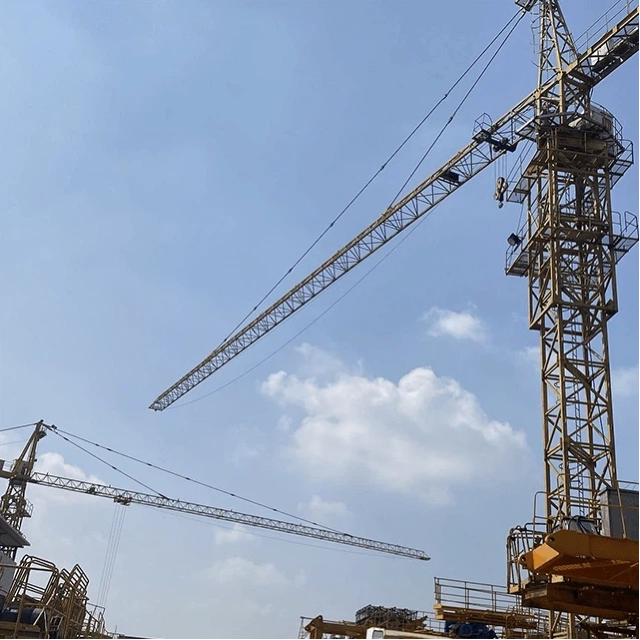
Understanding the step-by-step process of how a Crane Tower operates on-site is key to managing its functionality effectively.
Before a Crane Tower can begin operating, proper setup and assembly must be completed. The crane is first anchored securely to a foundation using concrete blocks or steel structures. The mast is then assembled, and the jib and counter-jib are attached. Once all components are in place, the crane is tested to ensure it is ready for operation.
Once operational, the crane follows a daily sequence of tasks that include:
Receiving Instructions: The operator receives instructions for which materials need to be moved.
Positioning the Load: The operator uses the hoist and trolley to position the load at the correct location.
Lifting and Transporting: The crane lifts the load vertically and moves it horizontally to the desired position.
Placement: The load is carefully placed at its destination.
This operational process repeats throughout the day, with the crane continuously moving materials to various locations as needed.
A critical aspect of Crane Tower operation is load control. The hoist and trolley must work together to ensure precise lifting and positioning of materials. Load charts are often used to determine the maximum load that can be safely lifted based on the crane’s configuration and height. This ensures that the crane does not exceed its capacity, reducing the risk of accidents.
Safety is a top priority in the operation of Crane Towers. To mitigate risks, Crane Towers are equipped with several advanced safety systems. These include:
Overload Protection: Prevents the crane from lifting loads that exceed its rated capacity, ensuring that the crane does not operate beyond safe limits.
Anti-Collision Systems: These systems help prevent collisions between the crane and other objects or machinery on the construction site.
Limit Switches: Automatically stop the crane’s movement once it reaches its maximum safe limit, preventing damage or accidents.
These safety measures are crucial for ensuring smooth operations and preventing accidents.
A well-operated Crane Tower significantly enhances construction site efficiency. By reducing the need for manual labor, a Crane Tower can help move large volumes of materials quickly and with minimal human intervention. This not only saves time but also reduces the risk of accidents associated with manual handling.
In fast-paced construction projects, a Crane Tower can significantly shorten timelines by enabling continuous material handling throughout the day. Whether it’s for lifting heavy concrete blocks or transporting steel beams to the top floors of a building, a Crane Tower ensures that operations run smoothly and efficiently.
While Crane Towers are highly efficient, they are not without their challenges. Some common issues include:
Wind Conditions: High winds can make it difficult for the crane to safely operate, especially when lifting heavy loads.
Load Imbalance: Improper load balancing can cause the crane to become unstable, leading to safety concerns.
Space Limitations: On crowded construction sites, space constraints can hinder the crane’s ability to move freely.
To address these challenges, professionals work closely with crane operators to ensure proper load distribution, monitor weather conditions, and plan the crane's movements efficiently.
In conclusion, understanding how a Crane Tower operates and the key factors that influence its functionality is essential for construction professionals. Whether you're looking to purchase or rent a Crane Tower, it's important to consider its core components, operational workflow, and safety features. By understanding these aspects, you can make informed decisions about how to best utilize a Crane Tower for your construction project. For more detailed information or to find the right Crane Tower for your needs, don’t hesitate to contact us at HAIBAO. We provide reliable and high-capacity Crane Towers tailored to meet the specific demands of your project.
What is the purpose of a Crane Tower?
A Crane Tower is designed to lift and move materials across vertical and horizontal distances on construction sites. It is essential for high-rise construction projects.
How do Crane Towers operate on construction sites?
Crane Towers are operated by a crane operator using control systems to lift materials, rotate the crane, and transport loads across the site with precision.
What safety features do Crane Towers have?
Modern Crane Towers come equipped with overload protection, anti-collision systems, and limit switches to ensure safe operation.
How does a Crane Tower improve efficiency on-site?
A Crane Tower increases efficiency by automating material handling, reducing labor costs, and speeding up project timelines.


